
Request Fulfilment Process is a part of Service Operation .
This Document contains detailed description of the Request Fulfilment Process, including process steps, roles, KPIs, CSFs, interfaces with other processes.
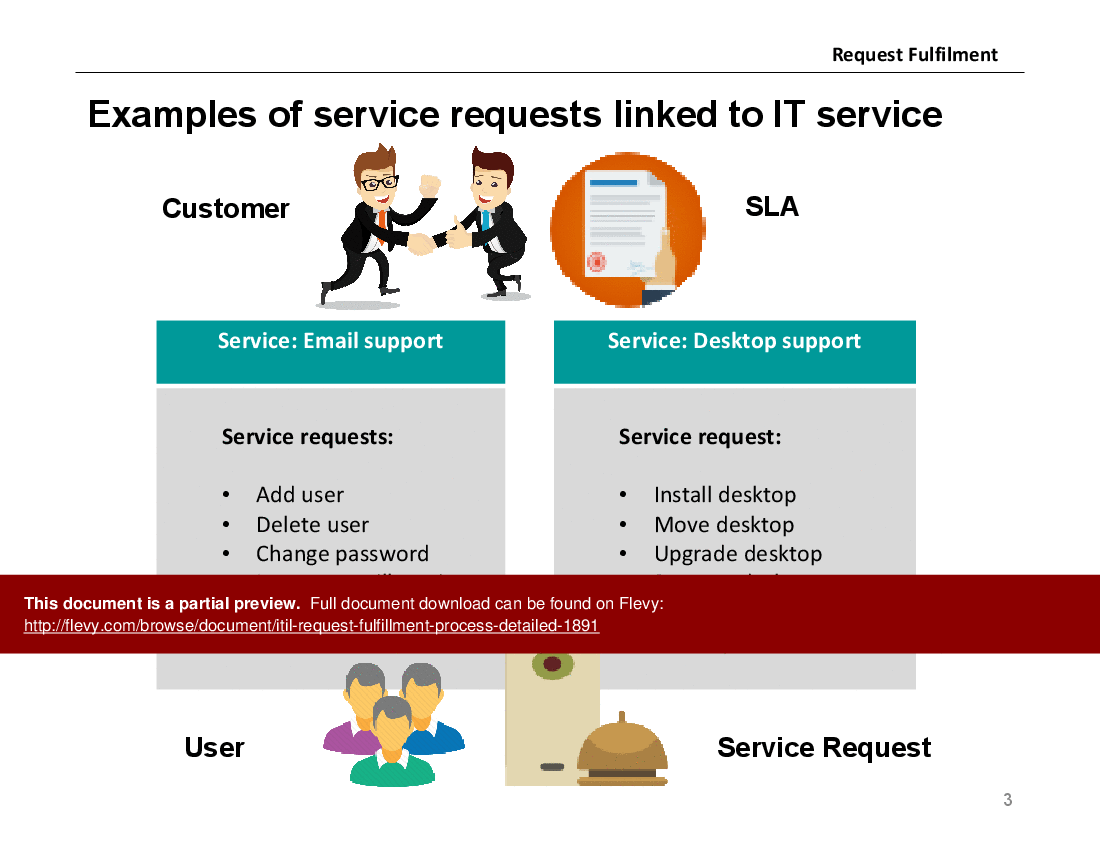
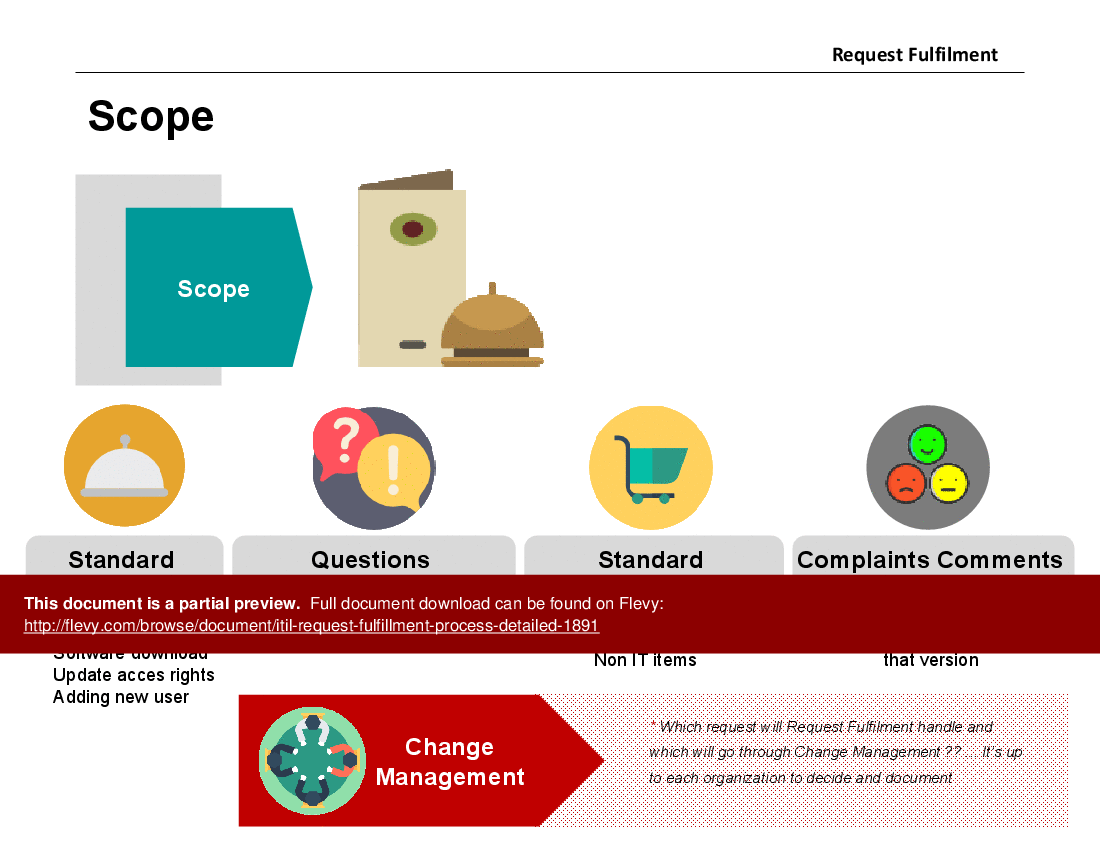
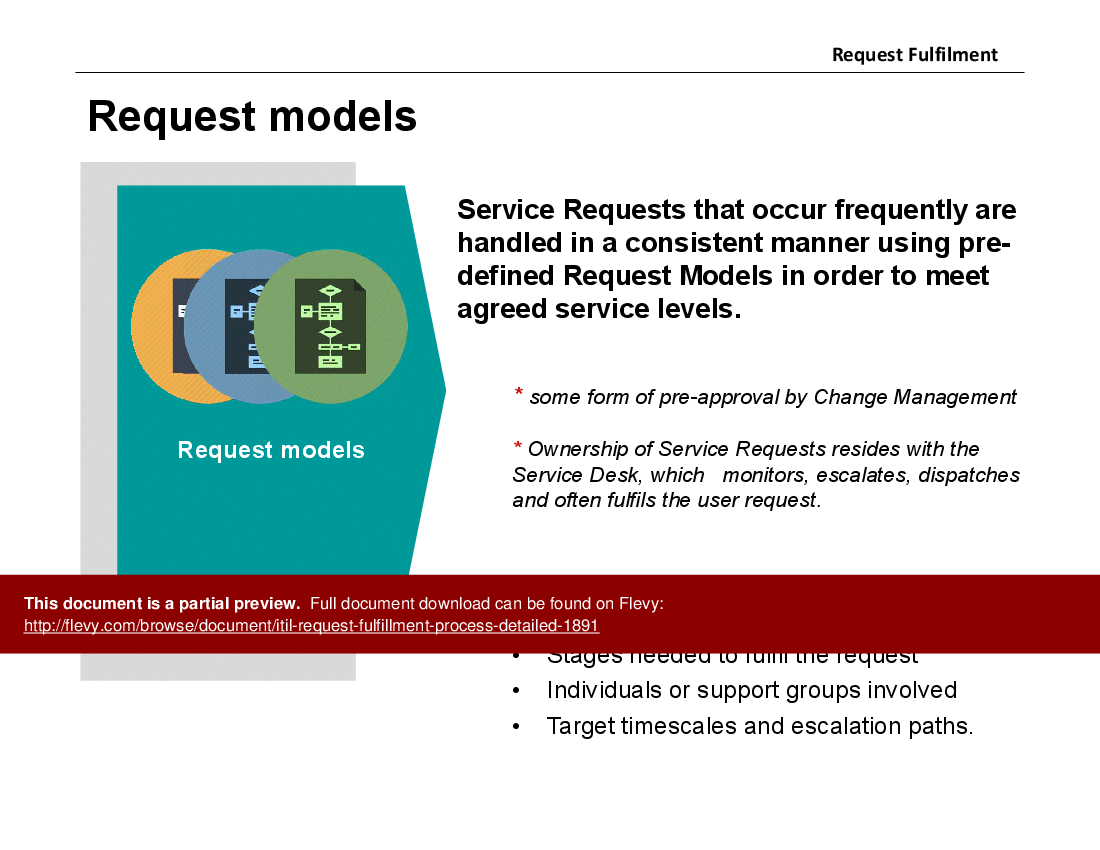
The Request Fulfillment Process PPT offers a comprehensive look at the intricacies of handling service requests within IT Service Management. It provides clear examples of service requests linked to IT services, such as email and desktop support. The PPT outlines the scope, including standard requests, questions, and complaints, and emphasizes the importance of request models for consistency. The process workflow is detailed, covering everything from request logging and validation to categorization and authorization. The roles of the Service Desk and Incident Management staff are clearly defined, ensuring that service requests are managed efficiently. This resource is essential for any organization looking to streamline their IT service request processes and improve overall service delivery.
Got a question about the product? Email us at support@flevy.com or ask the author directly by using the "Ask the Author a Question" form. If you cannot view the preview above this document description, go here to view the large preview instead.
Executive Summary
The Request Fulfillment Process PPT (ITSM) provides a structured approach to managing service requests within IT Service Management (ITSM). This presentation outlines the lifecycle of service requests, detailing the roles, responsibilities, and workflows necessary for effective request fulfillment. Executives and managers will gain insights into optimizing service delivery, enhancing user satisfaction, and ensuring compliance with service level agreements (SLAs). By utilizing this framework, organizations can streamline their request handling processes, reduce operational costs, and improve overall service efficiency.
Who This Is For and When to Use
• IT Service Managers overseeing service request processes
• Service Desk teams responsible for handling user requests
• IT Operations teams involved in service delivery and support
• Change Management teams coordinating service request approvals
Best-fit moments to use this deck:
• During ITSM training sessions for new service desk staff
• In workshops aimed at improving service request workflows
• When reviewing and optimizing existing request fulfillment processes
Learning Objectives
• Define the Request Fulfillment Process and its significance in ITSM.
• Identify the various types of service requests and their categorization.
• Establish a clear workflow for managing service requests from initiation to closure.
• Implement request models to standardize the handling of frequent service requests.
• Analyze key performance indicators (KPIs) to measure request fulfillment effectiveness.
• Enhance user satisfaction through effective communication and service delivery.
Table of Contents
• Introduction to Request Fulfillment (page 1)
• Key Definitions (page 2)
• Examples of Service Requests (page 3)
• Purpose and Objectives (page 4)
• Scope of Request Fulfillment (page 5)
• Value to Business (page 6)
• Request Models (page 7)
• Process Workflow (page 8)
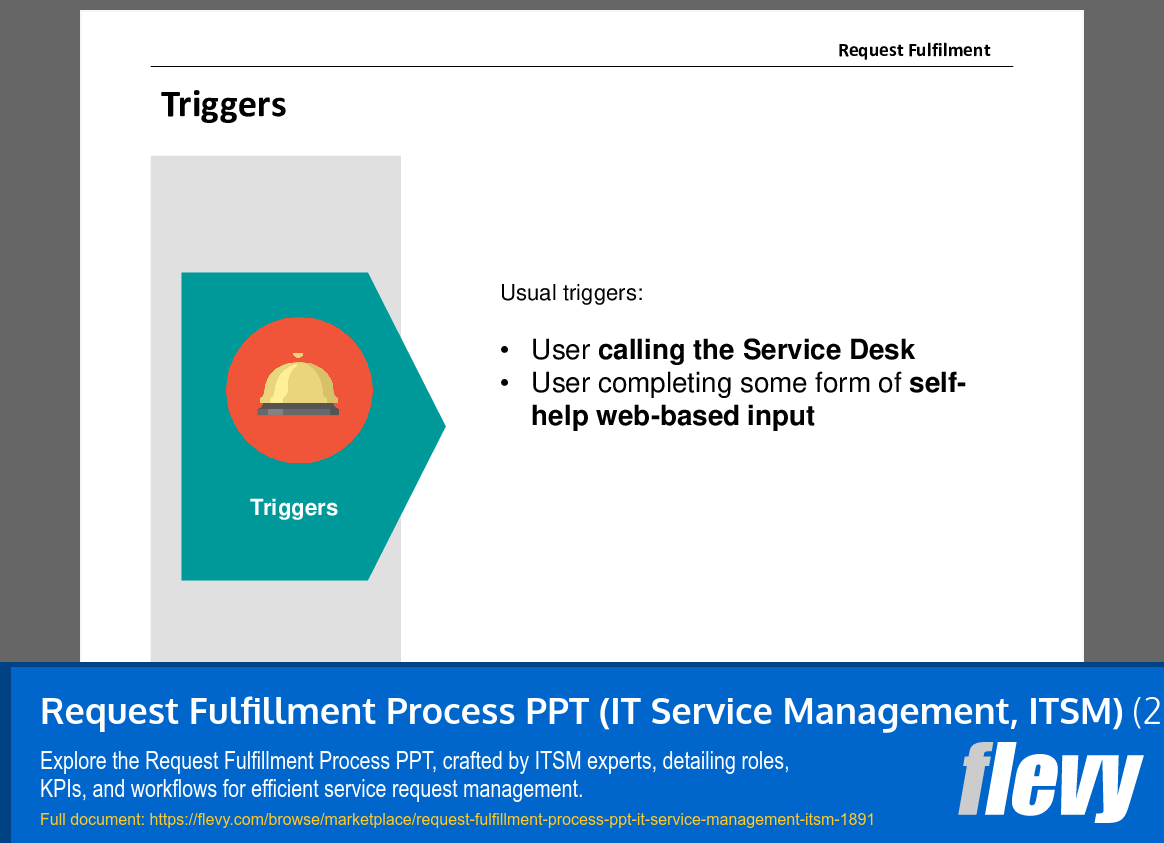
• Triggers for Service Requests (page 16)
• Process Interfaces (page 17)
• Challenges and Risks (page 18)
• Critical Success Factors and KPIs (page 20)
• Roles in Request Fulfillment (page 21)
Primary Topics Covered
• Request Fulfillment Overview - An introduction to the Request Fulfillment Process, emphasizing its role in managing service requests effectively.
• Service Request Types - Categorization of service requests, including incidents, standard changes, and operational requests.
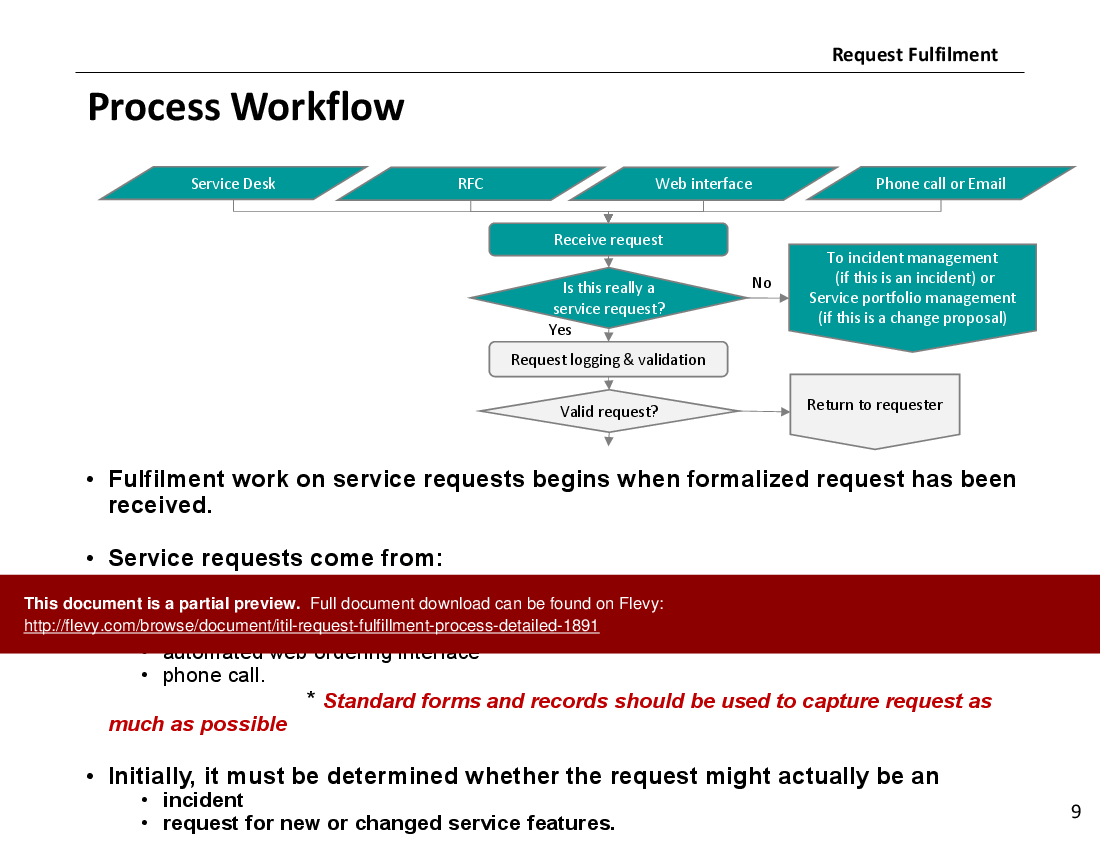
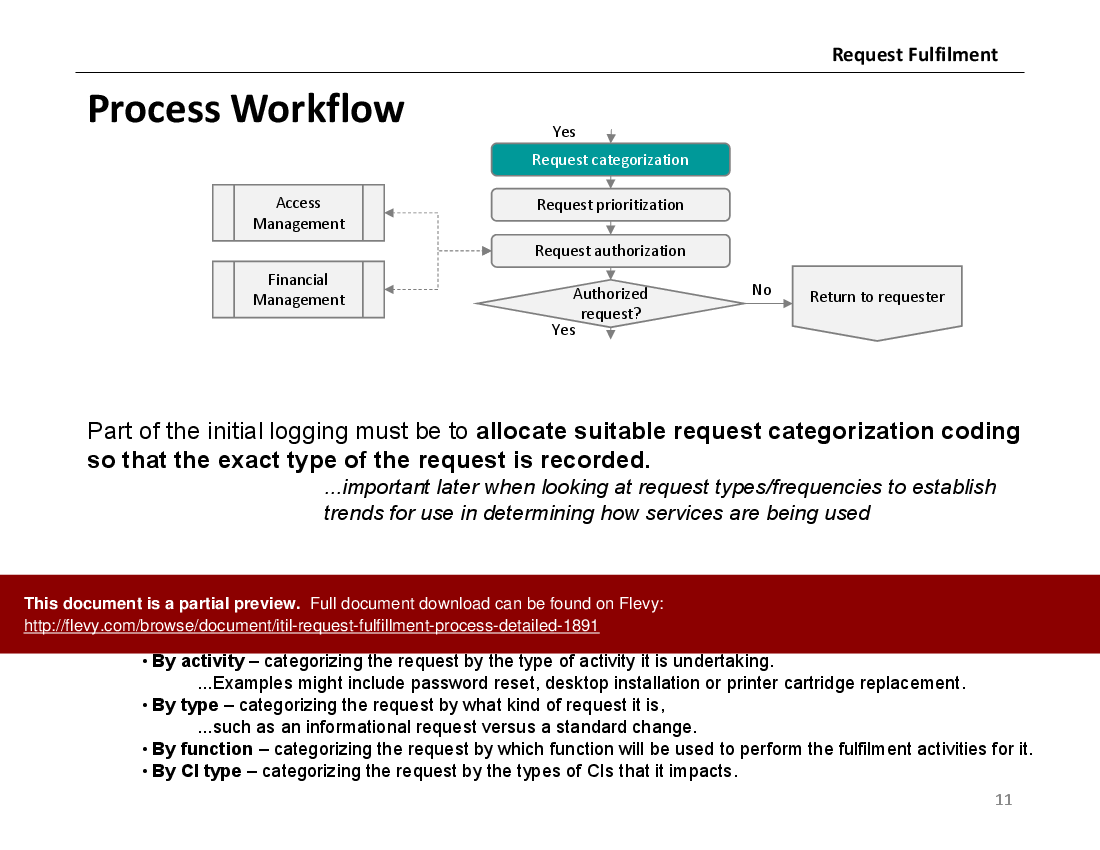
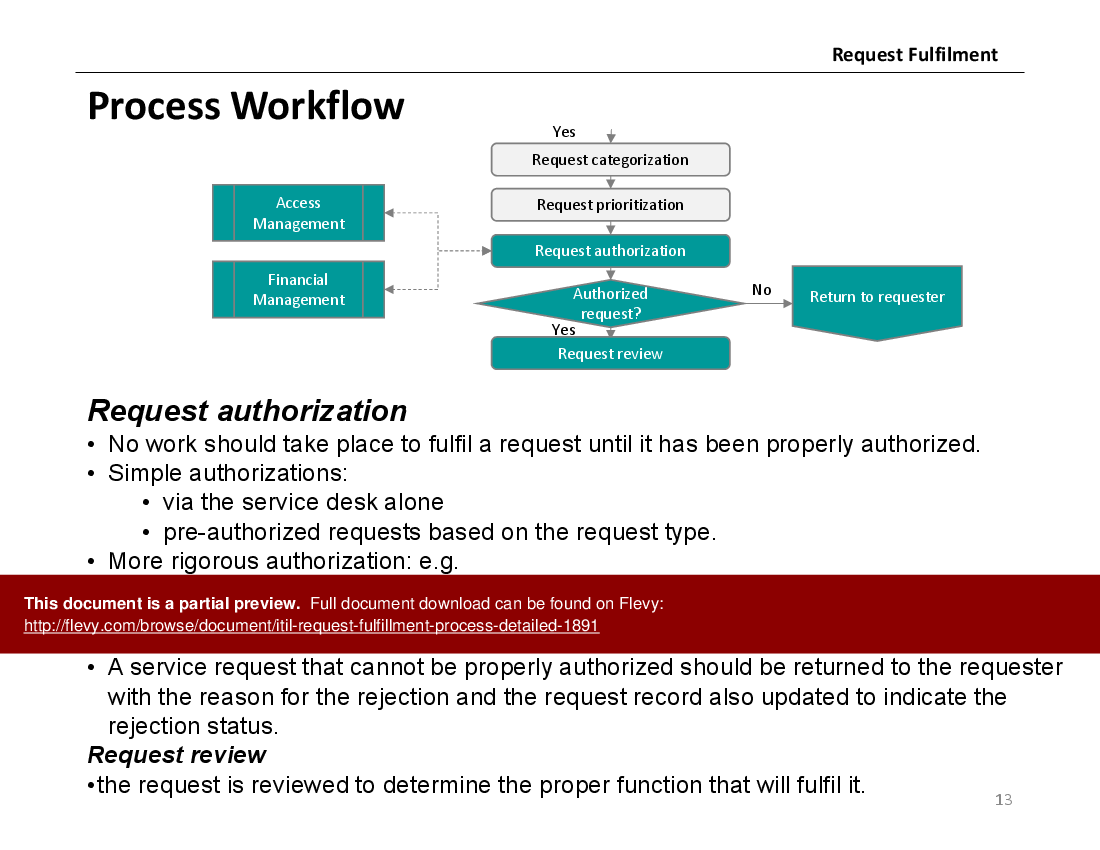
• Workflow Process - Detailed steps from receiving a request to its closure, ensuring all requests are logged and validated.
• Request Models - Predefined models for frequently occurring service requests to ensure consistency and efficiency.
• Value to Business - How effective request fulfillment contributes to improved productivity, reduced costs, and enhanced service quality.
• KPIs and CSFs - Key performance indicators and critical success factors essential for measuring the effectiveness of the request fulfillment process.
Deliverables, Templates, and Tools
• Service request logging template for consistent documentation.
• Request categorization framework to classify service requests effectively.
• Workflow diagrams illustrating the request fulfillment process.
• Standard operating procedures for handling common service requests.
• User satisfaction survey template to gather feedback post-fulfillment.
• KPI dashboard for tracking request fulfillment metrics.
Slide Highlights
• Overview of the Request Fulfillment Process with a clear visual representation.
• Examples of common service requests linked to IT services, enhancing understanding.
• Detailed workflow diagram illustrating the request handling steps.
• Key definitions slide clarifying terms like "Incident" and "Service Request."
• Value proposition slide highlighting the benefits of effective request fulfillment.
Potential Workshop Agenda
Introduction to Request Fulfillment (30 minutes)
• Overview of the Request Fulfillment Process
• Discussion on the importance of managing service requests
Service Request Workflow Deep Dive (60 minutes)
• Review of the request lifecycle from initiation to closure
• Identification of roles and responsibilities in the process
KPI and CSF Analysis (45 minutes)
• Examination of key performance indicators for measuring success
• Strategies for enhancing user satisfaction and service delivery
Customization Guidance
• Tailor the request categorization framework to align with organizational services.
• Adjust workflow diagrams to reflect specific internal processes and approval paths.
• Incorporate organization-specific metrics into the KPI dashboard for relevance.
Secondary Topics Covered
• Integration of Request Fulfillment with Incident Management processes.
• Challenges faced in implementing effective request fulfillment strategies.
• Risks associated with poorly defined service request scopes.
• Best practices for establishing self-service capabilities for users.
Topic FAQ
Document FAQ
These are questions addressed within this presentation.
What is the purpose of the Request Fulfillment Process?
The Request Fulfillment Process aims to manage service requests efficiently, ensuring users receive timely and effective support for their needs.
How are service requests categorized?
Service requests are categorized based on type, such as incidents, standard changes, and operational requests, to streamline processing and fulfillment.
What are the key performance indicators for request fulfillment?
Key performance indicators include the mean elapsed time for handling requests, the percentage of requests completed within target times, and user satisfaction levels.
How can organizations improve user satisfaction in request fulfillment?
Organizations can enhance user satisfaction by ensuring clear communication, timely responses, and effective resolution of service requests.
What challenges might arise in the Request Fulfillment Process?
Challenges include poorly defined request scopes, inadequate user interfaces, and insufficient monitoring capabilities.
What is the role of the Service Desk in the Request Fulfillment Process?
The Service Desk is responsible for the initial handling of service requests, ensuring they are logged, validated, and routed appropriately.
How can request models streamline the fulfillment process?
Request models provide predefined workflows for common service requests, ensuring consistency and efficiency in handling user needs.
What are critical success factors for effective request fulfillment?
Critical success factors include clear definitions of standardized services, effective communication channels, and user-friendly self-service tools.
Glossary
• Service Request - A formal request from a user for something to be provided.
• Incident - An unplanned interruption to an IT service or reduction in service quality.
• Request Model - A predefined process for handling frequent service requests.
• Service Desk - The primary point of contact for users to submit service requests.
• KPI - Key Performance Indicator used to measure the effectiveness of service request management.
• CSF - Critical Success Factor essential for achieving effective request fulfillment.
• Workflow - The sequence of steps involved in processing a service request.
• SLA - Service Level Agreement defining the expected service delivery standards.
• Change Management - The process of managing changes to IT services and infrastructure.
• User Satisfaction - A measure of how well user needs and expectations are met.
• Self-Service Tools - Tools that allow users to submit requests and access information independently.
• Categorization - The process of classifying service requests for efficient handling.
• Fulfillment - The process of completing a service request.
• Monitoring Capabilities - Tools and processes used to track the status of service requests.
• Operational Requests - Requests for standard operational services or support.
• Standard Change - A pre-approved change that follows a defined process.
• Request Logging - The process of recording service requests for tracking and management.
• Financial Management - The process of managing costs associated with service fulfillment.
• Access Management - The process of granting users access to services and resources.
• Service Catalog - A list of services available to users, including descriptions and request procedures.
• Request Prioritization - The process of determining the urgency and importance of service requests.
Source: Best Practices in ITSM PowerPoint Slides: Request Fulfillment Process PPT (IT Service Management, ITSM) PowerPoint (PPTX) Presentation Slide Deck, ITSM Consulting
This document is available as part of the following discounted bundle(s):

Save %!
Request Fulfillment Process - (ITSM, IT Service Mangement)
This bundle contains 2 total documents. See all the documents to the right.
Save %!
Service Operation Bundle (ITSM) - 3 processes PPT
This bundle contains 3 total documents. See all the documents to the right.
Save %!
IT Service Operation - 5 Processes
This bundle contains 5 total documents. See all the documents to the right.
|
Download our FREE Strategy & Transformation Framework Templates
Download our free compilation of 50+ Strategy & Transformation slides and templates. Frameworks include McKinsey 7-S Strategy Model, Balanced Scorecard, Disruptive Innovation, BCG Experience Curve, and many more. |









